The Pending Phase-Out Of The U.S. Penny
Today, we’re diving into a headline that’s been circulating more and more lately: the phase-out of the United States penny.
It’s a small coin with a big history—but also a growing cost. So today, we’ll break down why the penny may be on its way out, what that means for you as a consumer, and the simple things you can start thinking about now to prepare.
0:30 Welcome afternoon, Michiganders, and welcome back to Tuesday with Tom Michigan's Only podcast, where we talk about estate planning, a state settlement, and everything in between. As always, I'm your tope, I'm your host, Tom Doyle, estate planning attorney, lifelong Michigander, and your guide to planning for your future. Well, just a. Brief recap last episode. Don't rely on services like Trust and Will or Legal Zoom for your estate plan. If you're thinking about using one of those services or similar service online where you can order your state plan, please please listen to this important episode where I explain how those services actually work and why we do not recommend that you use one. Today's show, well, we're kind of cut topic that you probably wouldn't expect me to be talking about today, but it's in the news. So today I'm going to spend a little time talking about depending phase out of the US penny. But please remember what I'm about to discuss is meant to be educational and informative.
1:54 It is not legal advice. Every person's situation is different, so be sure to talk to your own attorney in this case, perhaps your banker financial advisor to figure out what makes the most sense for you and your estate plan. The pending phase out of the US penny. Well, if you've been listening to the news recently, you would know that, in fact, the US Mint has stopped.
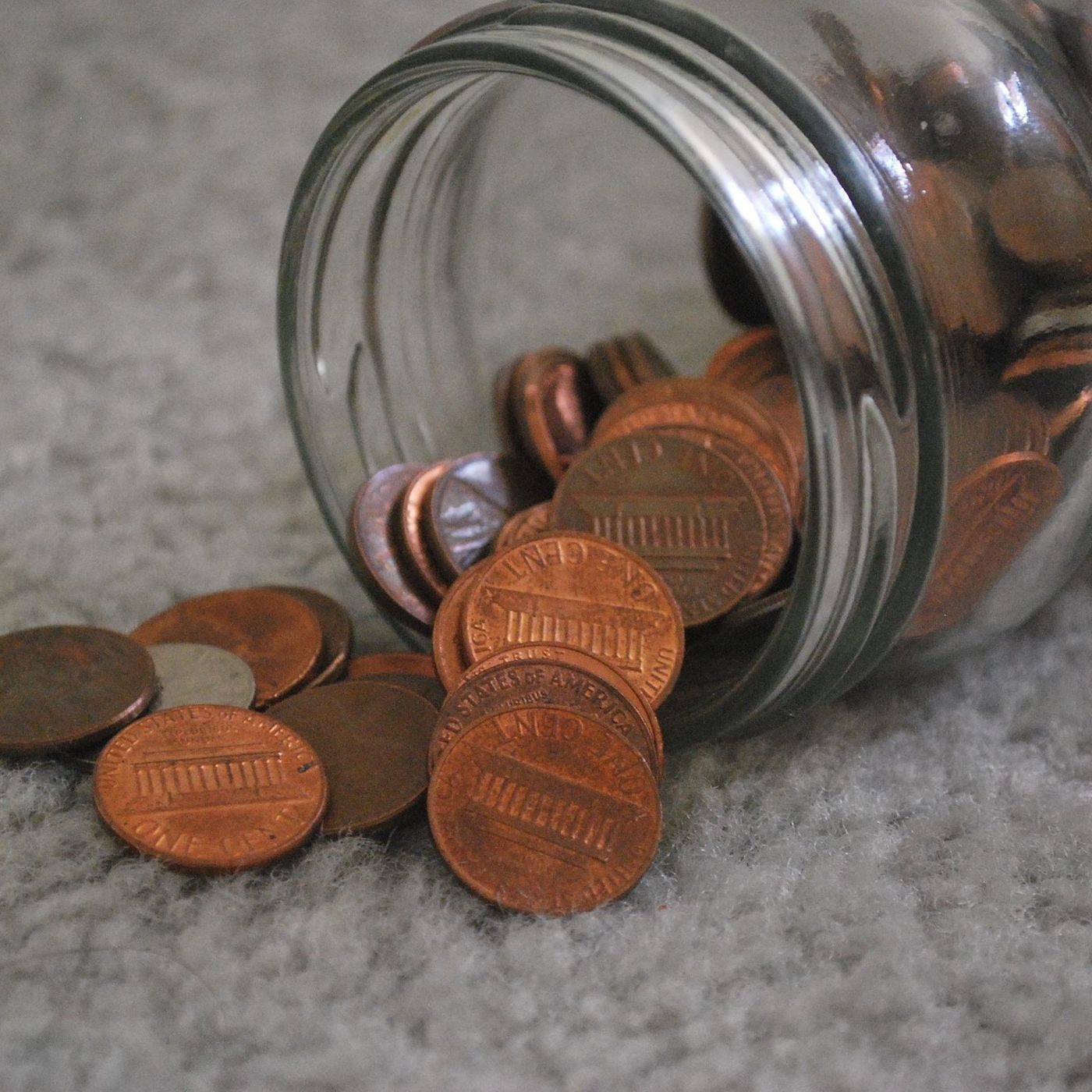
2:38 Making the United States penny. Well, it's a small coin, but it's got a big history and it's got a growing cost. So today we're going to break down why the penny is on its way out, what that means to you as a consumer, in the simple things that you can and do starting now in thinking and preparing for that to happen. So first, why is the penny being phased out? Well, for years, economists and policymakers have pointed out that the penny actually cost more to make than it's worth. According to the US Mint, currently it is now costing three point six y nine cents to mint a single penny, which means obviously the US loses millions of dollars annually simply keeping the penny in circulation. On top of that, quite frankly, pennies are rarely used in everyday transaction. Ask yourself, how frequently do you actually use a penny or do you simply take them home and p apps in your money jar or maybe they're going to end up in the bottom of your car's cup holder. So they're rarely used
4:09 in everyday transactions, and they can create inefficiencies at tax at cash interested it takes obviously time for someone to count out those penalties pennies during the daytime to make change and at. The end of the day and other countries. Think about other countries, Canada, Australia, and New Zealand all phased out their lowest denomination coins years ago without any major disruption. So the US is headed towards the same conversion. So what will the phase out actually look at. Well, the key thing to understand is that eliminating the penny does not mean prices will suddenly jump. A lot of people are concerned about, well, if there's not a penny, prices are going to have to jump. Well, here's how it typically works based upon other countries and what is expected to happen in the US model. So first, as already noted, pennedies, pennies have stopped being produced now, retailers, banks, the public can still use them, but they will gradually disappear. Second, cash transactions are going to be rounded. That doesn't mean prices don't change, but only the final total after tax
5:46 is going to be rounded to the nearest nickel. So when you're spending cash for your transaction, after the final total is calculated, that total is going to be rounded to the nearest nickel. However, electronic payments, cards, phones, online purchases are going to remain. Exact to a cent. So if you're going to be spending cash, your final number will be rounded to the nearest nickel, But if you're going to be paying with some electronic payment, it is going to be still at the exact penny. Now rounding is neutral, what will happen is that totals ending in one to two cents will be rounded down, while totals ending in three to four cents will be rounded up again, basically going down or up to the nearest nickel. Actually, when this occurred in Canada, studies show that the overall impact on consumers was almost zero. But what does this mean for you as a consumer. Well, again, for most people, the impact is going to be minimal. But here's what
7:19 you can expect. One there's going to be less loose change clutting your life without the penny. Change becomes simpler and quicker. You're also going to find a push towards digital payments. Many people already prefer to pay and will continue to prefer to pay electronically to avoid rounding all together. You will also likely see changes that cash registers. Cashiers will be rounding your final total up or down, and some of those businesses might even publish a rounding chart.
8:06 But again, just remember what I already stated is at a total ending in one to two that would be rounded down, a total ending in three to four. Would be rounded up. You might also find that charities may adjust donation campaigns, maybe penny drives, which, as some charities have done in the past, will shift now towards nickel or dollar based models. Well, what should you do to prepare now? It's already happening, So here are some simple practical steps that you could consider taking now. One, either start using or rolling your pennies.
8:59 If you have jars full of them, good chance to roll them, take them to your bank or your credit union and convert them into usable funds. Well. Another, obviously, don't panic because they will still be accepted at banks even after the phase out begins. It's expected that banks will accept them for years, So it's not like you have to rush out right now today, roll all of your pennies, run to the bank and change them in or catch them in because they've stopped producing the pennies. But there will be a period of. Time that banks will continue to accept them before they stop accepting pennies at all. You might consider donating your pennies.
9:51 Many charities out there are going to gladly accept your rolled or loose coins. And don't assume you'll be cheated by rounding. It doesn't necessarily you're going to be cheated. Countries that eliminated their lowest coin really saw almost no consumer disadvantage. Also, pay attention to how you pay. If rounding bothers, you then use a card, or use an Apple pay, or use an electronic payment, and your totals are going to remain exactly the same because they are not going to be rounded. Ultimately, though, the debate over the penny is about whether or not sentiment and tradition outweigh cost and practicality. While the penny has been part of the US currency since seventeen ninety three, the realities of today's economy make its retirement inevitable for consumers. Thoh, the impact should be minimal, even smooth, especially if you start doing things now with the pennies that you have already accumulated. Well, before we wrap up, though, I thought
11:27 it might be fun to take a quick detour and look at some of the interesting trivia about pennies. Some things you might not know, but we'll definitely enjoy hearing, and it might one day help you on some trivia question if you're ever being in a trivia game and the question about pennies come up. So let's jump into today's fun fact segment. Well, fun fact one, A penny used to go a long way. Well, when the first US penny was minted way back in seventeen ninety three, it actually had the same buying power as about thirty cents today, a single penny could buy basic goods, which is a far cry from its value today, where most of us won't even pick one up off the sidewalk.
12:28 I know I do. If I see it on the sidewalk or I see it through a parking lot, I will pick that penny up. I normally take it home, put it in my money jar. Now when I pick those up, I'll obviously be cashing them in, hopefully sooner rather than later at a bank. Fun Fact two, the penny has actually had more makeovers than any other US coin over the years. The penny has actually undergone eleven different design changes, which are more than any other coin in US history. That would be from Liberty themed designs to the Lincoln Memorial. It has had quite the facelift over time. Fun Fact number three.
13:16 Pennies aren't really copper anymore. I know we think about them as being copper, but despite their classic color, today's penny is actually ninety seven point five percent zinc coated with a thin layer of copy and copper. And that switch happened in nineteen eighty two when copper got too expensive for the mint to use, so they switched made the penny mostly of zinc with a coding of copper as a way of saving cost in producing the penny. Fun Fact four.
13:57 This probably won't surprise you to learn, though, that a mayor Perkins hoard pennies buy the billions. That's with a B. It's estimated that. Over seven billion dollars worth of pennies are simply sitting in jars, drawers, glove compartments all across America. Most pennies, in fact, never get recirculated. They just vanish into our household change black holes. Fun Fact five the penny, and I mentioned this earlier, though the penny actually cost more than it's worth. It costs more to produce one penny now than the one penny is worth.
14:51 And if you. Multiply that that three point six number that it's costing to produce penny today, and you multiply that times the number of pennies, that three point sixty nine number, and you multiply that times the number of pennies, billions of coins, billions of coins, and taxpayers end up footing the bill for currency that we seldom use. Fun Fact number six. Other countries ditched their pennies long ago. Canada eliminated its penny in twenty thirteen, Australia stopped minting theirs in nineteen ninety two. New Zealand did the same in nineteen eighty nine, all of them transitioning smoothly with simple rounding rules, and their consumers adjusted almost immediately. Fun Fact number seven nineteen teen forty three steel penny well during World War Two copper because it was needed for ammunition. The mint because of that issued pennies made from zinc coated steel. You might have seen some of those from back at that time.
16:20 They looked silver, felt lightweight, and quite frankly, today they's simply a popular collector's item. Fun Fact number eight. Lincoln made history on the penny. When Abraham Lincoln's image was added to the penny in nineteen oh nine, he became the first real historical figure to appear on US currency. Fun Fact number nine. You might ask yourself, is it legal to melt pennies and to use the copper if you will in that from that process. Well, even though the metals can be worth more than a cent, US law in fact prohibits melting pennies and nickels for scrap value. So no, you can't start a black market copper operation from your coin jars.
17:18 So forget about that. If that was something that you had been thinking about. Fun Fact number ten. Pennies are actually heavier than you might think. A single penny weighs two point five grams. Well, if you have a jar of one thousand pennies, that's over five point five pounds of metal. And again multiply that by the millions of household and you start seeing why billions of pennies disappear from circulation. Well, that that's going to wrap up this week's fun facts insert. The penny may be small, but its.
18:10 History is anything but. So I guess let's just get back to the rest of the show. Well, today's program, Well, we've talked about pennies. Obviously, the show is really about estate playing a state settlement.
19:16 So remember amand and I would be honored to help you protect the people you love, whether that means creating a new estate plan, updating existing one, or guiding you through the estate settlement process during a difficult time. And we try and make it easy and convenient to get started. We have in person appointments those are available both in Grand Rapids and in Lancing. We also have virtual consultations that can be by zoom or phone, so we can work with you wherever you happen to be in Michigan.
19:57 And we have our Legal Store. Maybe you just need one document, maybe you're looking for a new certificate of trust. Well, our Legal Store enables you to order individual legal documents twenty four to seven that can be prepared and delivered to your email inbox. All of that and more is available through our website, DOYLELOWPC dot com. So I encourage you to learn more, schedule your consultation today head on over to doylelowpc dot com and we look forward to working with you.
20:55 Well. I think that's going to be a raptor today's show though as all. If you have a comment, a question that you'd like to have answer, a topic that you'd like me to cover in future episode, head over to Tuesday with. Tom dot com. There you can leave me a voice message by clicking on the microphone or just send me an email at Tom at Tuesday with Tom dot com. And so you don't miss an episode, be sure to follow us on the podcast platform that you use to listen to Tuesday with Tom. If you were using Spreaker, which is a service that we actually produce the podcast on, and you were to go to the Tuesday with Tom dot com website, you'll see a clear link there where you can sign up to follow us, and whatever podcast platform you're using will have a follow up ability as well. And of course you can also follow us on Facebook. Invite your friend and families to do the same. That would be Tuesday with Tom and of course the law office is Doyle Law PC. Don't forget too subscribe to our email list at Tuesday Withtim dot com so that you can stay up to date on new podcast on and stay and important estate planning tips. And of course you can listen to Tuesday with Tom wherever you enjoy your podcasts services like Apple Podcasts, Spotify, Amazon Music, Google Podcast, iHeartRadio
22:30 and Spriaker, and you can always ask your smart speaker to play Tuesday with Tom. Well, thanks again for spending part of your day with us today and until next time, I hope that you have an awesome day here in Michigan. Stay safe. Tuesday with Tom has been brought to you by the estate planning attorneys at Doyle LAWPC. To learn how we can help you with your estate plan or with settling a loved one's estate, please call us today at five one seven three two three seven three sixty six. That's five one seven three two three seven three sixty six


