What Happens If You Die Without a Will in Michigan? (Episode 319)
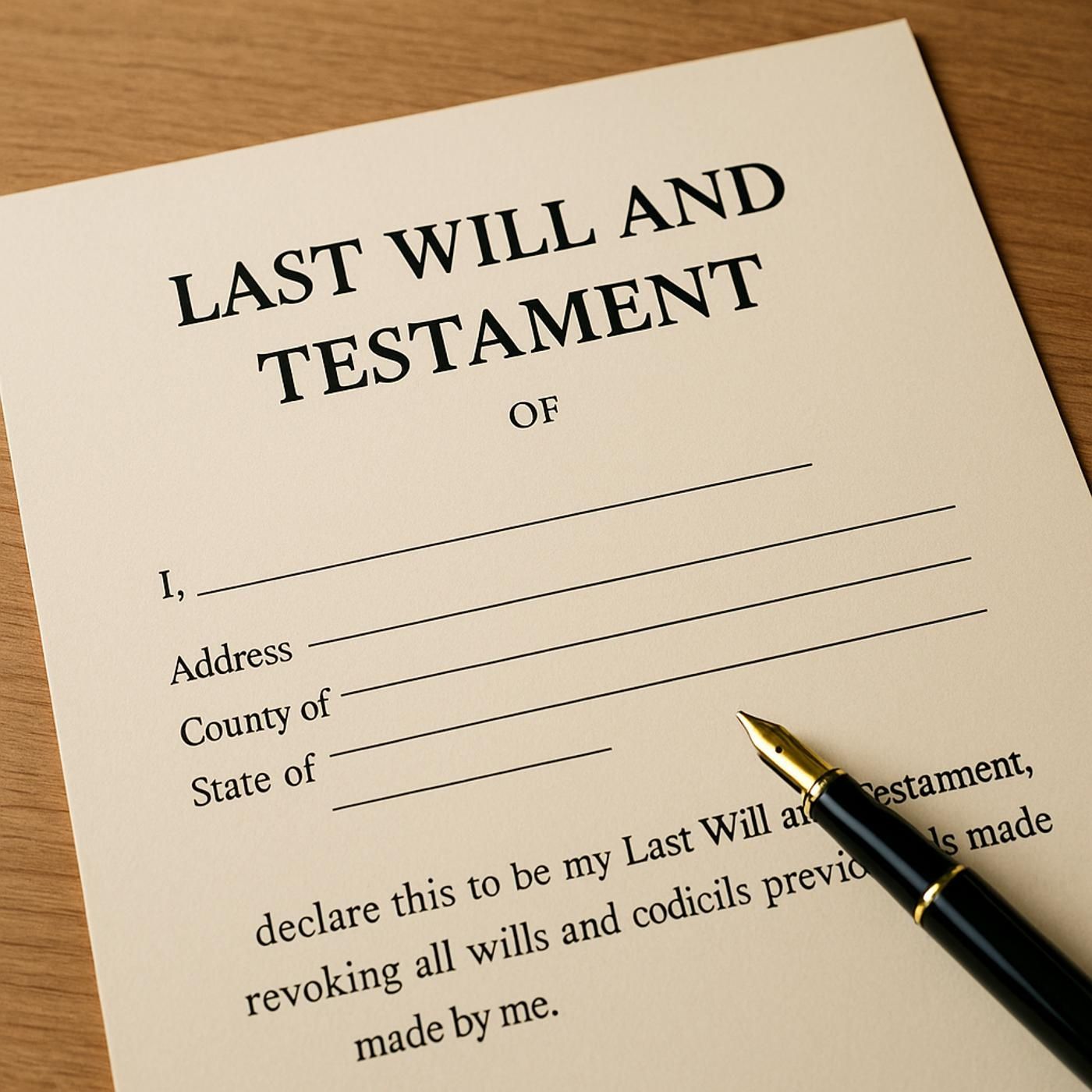
In today’s episode of Tuesday with Tom, we’re diving into what really happens if you die without a Will in Michigan. Who gets your assets? What if you have no close family? I’ll walk you through the State’s Intestate Succession laws and explain why having a Will — even a simple one — can save your loved ones time, money, and stress. Plus, I’ll share how Amanda and I can help you create or update your estate plan, and the convenient ways you can get started.
0:31 Good afternoon, Michigan Anders. It's Tuesday, May thirteen, twenty twenty five, and that means it's time for another episode of Tuesday with Tom, Michigan's only Internet show where you get answers to your questions about a state planning and a state settlement right here in the Great Lake State, and we don't send you a bill. I'm your host, Tom Doyle, a state planning attorney, lifelong Michigan resident, and a proud ambassador for everything good about our beautiful state. Thanks for joining me today. Well, last episode living trust, what they are and why you might need one. So if you're thinking about having a living trust as part of your state plan, I invite you listen to the last episode that you can find at Tuesday buttime dot com, where I talk about what living trusts are and discuss when people might need to have them as part of their state plan. Today's show what happens if you die without a will in Michigan. It's a very common question that we get from clients all the time. If I don't have a will, what will happen to my estate when I die? And that is what we're going to spend some talking time. If you will talking about in today's episode.
2:14 So what happens if you. Die without a will in Michigan. Well, if you die without a will in Michigan, we're going to be talking about you have died in test state. That's what that refers to, as someone who dies whether it will. So what is dying in testate? Well, when someone dies without a valid will, again, that's called dying in testa. That means you did not legally express how you want your money and property distributed or who should be in charge of handling your estate. So in Michigan, if that happens, the state has a plan for you, and it's called Michigan's intestate succession laws.
3:01 But here's the catch. Michigan's plan for you might be very different from what you have wanted. In fact, during my forty plus years now of practicing law, I can only think of one time, one time out of all those thousands of clients that we've assisted with the state plans, where what the State of Michigan's plan under interstate succession for a client actually matched what the client wanted. So under Michigan's state succession rule, who gets what? Well, let's look at some common scenarios if you will. One, you're married with no kids. Well, if you're married with no kids, you might think that your spouse will automatically get everything. That's what most clients would think. I married and I die, I don't have kids, everything can go to my spouse. Well, in fact, under Michigan law, if your parents are still alive one or two both parents are still alive, they in fact might also get a cut of your estate because under Michigan law, your spouse gets the first one hundred and fifty thousand plus half of the remainder and anything that other half of the remainder would then go to your parents. Again,
4:38 not what most clients would think and would want to have happened, and that can also cause problems. Think about this, maybe one of your parents is on Medicaid and now they receive an inheritance from you at the time of your death. It could end up disqualifying them from receiving Medicaid benefits. Another scenario, you're married with kids. Again, most clients that we work with, when Amanda and I are talking to them, if they're married and they have kids, they will say something like, look, if I die, I want my estate to go to my spouse, and then when we both died, then we want the estate to go to our children. Well, again, under Michigan's into state succession rules, your spouse gets the first one hundred and fifty thousand and half of the remaining estate, and the other half of that estate goes to your children. Now, when I talk about these numbers one hundred and fifty thousand dollars, essentially there is an escalation because of inflation factor under the statute, So we would to be sure, we'd really have to look at what is that number going to be at the time of your death. But we're using the beginning numbers, not the inflated numbers for inflation.
6:07 But again the idea, the important part is you're married with kids. Depending upon the size. Of your estate, not necessarily everything is going to go to your spouse. In fact, some of it might end up going to your children. And it doesn't matter if they're adults or if they're miners. And if they're miners and they now are going to receive an estate from you, there may well likely have to be a conservator appointed by the probate court to receive. And manage that estate for them. Another scenario, you have children.
6:50 But no spouse. Well, in that case, under Michigan law, your children will inherit everything divided equally, and that would include adopted children if you've adopted any children, but it does not include stepchildren. So if you die without a spouse and you have children, and you have stepchildren, and you wanted your stepchildren to receive part of your estate, that's not happening under Michigan law, unless you were to adopt them, or you made sure that you did not die into state. Another example, you have no spouse, no kids, no parents.
7:39 You don't have anyone. Naturally in that order, and that basically means no spouse, no kids, no grandkids, no parents, et cetera. Well, now here's what's going to start happening. It's going to go down the line. So what the law basically says is you would start by saying, all right, go up a generation to parents. But you don't have parents, so now you come down to your siblings. So the estate would end up going to your siblings. If you don't have siblings, or you have a deceased sibling, then that deceased siblings share, or if no siblings, then we're gonna talk. I mean, if you've had siblings, but maybe they've all predeceased you too, well, then nieces and nephews are going to be involved.
8:26 So if you think about I tell clients to think of it. As like a Christmas tree. We're starting to come down. We kind of had my parents at the top. We're coming down to my siblings, We're coming down to nieces and nephews, et cetera. And so that's kind of this whole idea of this Christmas tree that I tell clients. But let's say you're an only child, so you don't have siblings, and your parents were only children, so there are no aunts and uncles involved, and so they're is literally no one in line to inherit your estate. In that case, the entire estate goes to, guess it, the star on top of the tree, which is the state of Michigan. And unfortunately, many clients find themselves in that situation today. They are only children of only children, and so there are no other relatives to receive the estate, and in that case, the estate would all go to the state of Michigan. And seldom do we ever have clients who look at us and say, hey, I want my estate to go to the state of Michigan when I die. Another consideration, who's going to be in charge of your estate?
9:56 Well, without a will? Into state succession statutes in the state of Michigan say that it's the probate court who will appoint someone to be what's called your personal representative. So there's a statute that says who is in line to become that personal representative. That might not be a person that you want to be in charge, that might not be a person that would be a good person to be in charge. And so now you might have a fight amongst your amongst your surviving family members in court over who it is that should be placed in charge of settling your state.
10:46 And if you notice all of this that I just said points out another glaring fact about into state succession, and that means your estate is going through probate. Many clients, when we talk to them. About their goals if you will on their estate plan, one of the goals many many clients have is to avoid probate. Well, interstate succession has your estate going through probate. One more thing, though, what about minor children? So you have minor children and you die without having put an estate in place, and now your state is going to pass to those minor children by interstate succession. The other problem that you have, though, is that by not having an estate in place, a state plan in place, and quite frankly this would be where a will comes in place, you have not named a guardian for your minor children.
11:56 You have not decided who they're going to live with if you die. In fact, it's Amanda and I have the situation quite often where we will have a young person sitting across the table from us during a consultation and they will look in and say, you know, I don't know why I'm even doing an estate plan because I don't own anything, or we don't own anything. All we have is a six month old baby. Well, the fact of the matter is that's the most important decision that you now have to make, and that is who is going to raise that six month old baby, or who is going to raise your minor children if you die again, If you haven't designated that in a will, then it's going to be the probate court who's going to make that call. And yes, probate courts, the judge is going to try and pick someone who seems suitable, but it might not be the person that you would have chosen, and unfortunately, in too many families, it could trigger family disputes. Let's say you and your spouse have both died and you have minor children. You might be setting it up where each of your respective families, your family or spouse's family are going to be arguing that they are the ones who are in the best position
13:28 to raise the minor children. And you could have avoided all of that by having an appropriate will in place in which you named who the guardians would be that would be raising those children. So review some of the key takeaways from this conversation today about what happens if you. Die with it without a will. In Michigan. One, the state is going to decide who get your property, and again, it might not be who you choose to the probate court will decide who's going to be in charge of the process of settling year state. Again, that might not be the person that you would choose, and it might lead to family drama. Another takeaway, you lose the opportunity to make any specific gifts, so you might be thinking, well, I really want this particular asset to go to this particular individual. You're losing that opportunity because the State of Michigan has already decided where the estate's going to go to, and they're not going to be concerned about specific gifts.
14:47 It might be. In fact, you might have thought, I want something to go, let's say to my step children, but the state of Michigan doesn't give your estate to your step children. Or maybe you have some charitable interest. I want a certain amount to my state to go to my church or go to the American Red Cross, whatever it is. The State of Michigan won't do any of that. Why because at the end of the day, if there's nobody take your state, who gets it that would be the state of Michigan. So you're losing the opportunity to maker specific gifts, You're losing the opportunity to avoid probate, and you could be losing the opportunity to protect a loved one's inherence. And most importantly, most importantly for many clients, you lose the chance to name guardians for your children. So those are all the things that could happen that will happen if you die without a will in Michigan and your state is now going to be subject to into state succession. Now, there are a lot of ways to avoid it. One, obviously, is to have a will, because if you have a will, that will is saying this is where I want my estate to go to. That will is saying this is who I want to be in charge of my estate.
16:16 That will is also going to say who it is that you would want to be the guardians of your minor children. So all of those things can be accomplished simply by having a will. What can't be accomplished simply by having a will, though, is if one of your goals is to avoid probate. We've had a lot of discussion in previous episodes of Tuesday with Tom about why wills do not avoid probate, and if one of your goals is to have an estate plan that's going to avoid probate, you would learn if you have not listened to any previous episodes, that having a will in Michigan is not a probate avoidance strategy. So if you don't have a will, or your will is outdated, obviously the best time to fix it is today and a man and I would be truly honored to help you protect your loved ones, whether it means creating a brand new estate plan and a new will for you, or updating
17:46 and existing one, or guiding you through the estate settlement and process during a very difficult time. We try and make it easy and convenient to get you started. We can offer in person appointments. Those are available at our Lansing location or our Grand Rapids location. We offer virtual consultations by zoom or phone wherever you happen to be in the state of Michigan. And of course we have our Legal Store, which is the ability to order just an individual document through our website. Maybe all that you need is a. New certificate of trust, or you can simply go to the Legal Store, browse through the listed documents that we can prepare for you and they can be prepared and delivered through you. All of that, how to schedule in person appointments or virtual consultations of the Legal Store is available at DOYLELAWPC dot com. So I invite you go to DOYLELAWPC dot com to learn more and to schedule your consultation today. Well, that is going to be a wrap for today's show.
19:14 As always, Oh, if you have a comment. A question, you'd like answered or a topic that you'd like to me to cover in a future episode, head over to Tuesday with. Tom dot com. There you can leave me a voice message by clicking on the microphone or just send me an email at Tom at Tuesday with Tom dot com. Be sure to please follow us on Facebook fte your family and friends to do the same. That's Tuesday with Tom and the Doyle Law office is Doyle Law PC. Don't forget to to subscribe to our email list at Tuesday with Tom dot com as well as at Doyle Law. So either of those you have the ability to subscribe to our e newsletter where we're going to keep you up to date on important estate planning tips. And you can now listen to Tuesday with Tom wherever you enjoyed podcast. We're on Apple Podcasts, Spotify, Amazon Music, Google podcast, iHeartRadio, and Speaker and many many other distribution services as well as your smart speaker. You can always ask your smart speaker to play Tuesday with Tom.
20:35 Well, thanks again. For spending some of the part of your day with us, and until next time, take care, stay safe and have an awesome day and an awesome week in Michigan. Tuesday with Tom has been brought to you by the estate planning attorneys at Doyle Law PC. To learn how we can help you with your state plan or with settling a loved one's estate, please call us today at five one seven. Three two three seven three sixty six. That's five one seven three two three seven three sixty six.


